

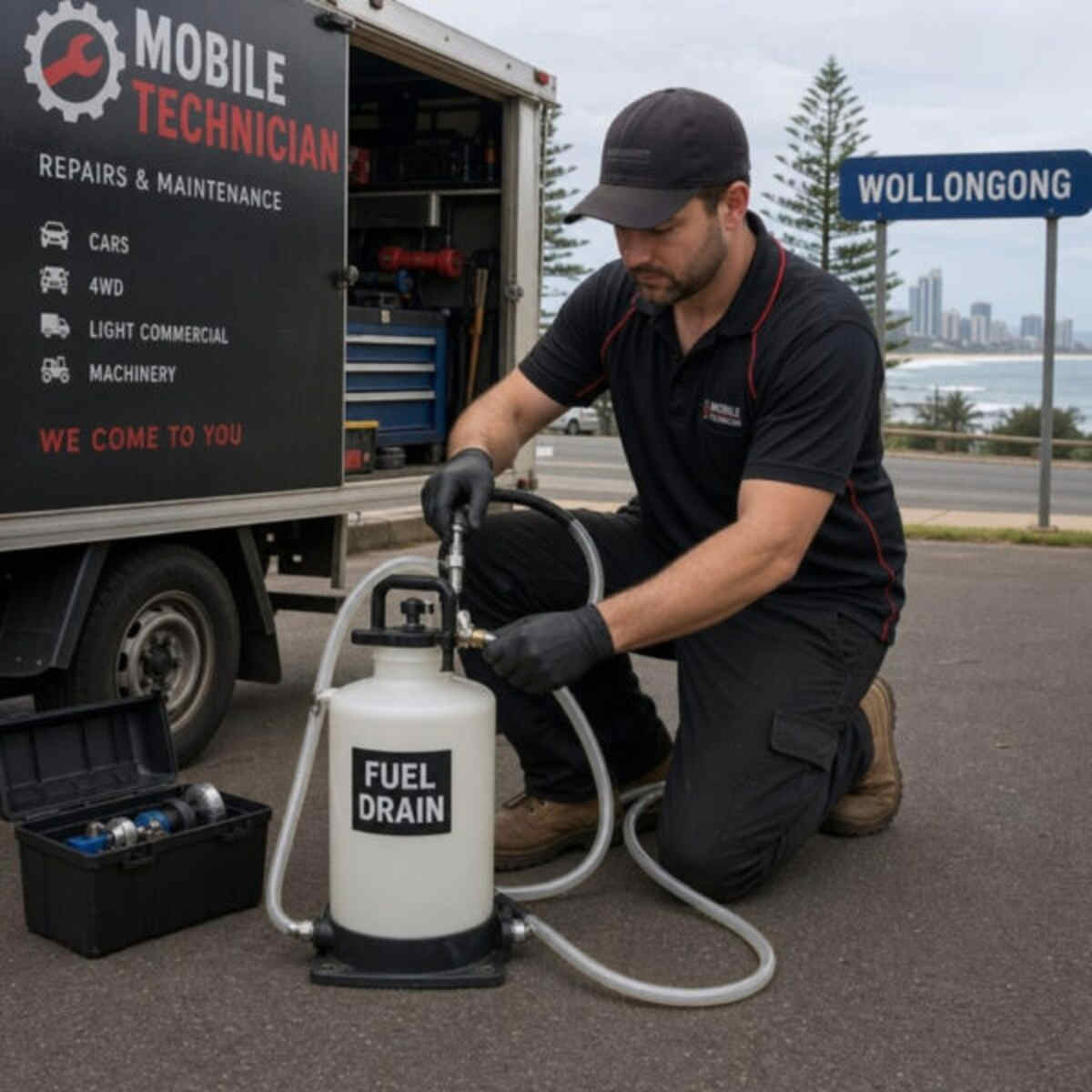

Fast Help When Fuel Problems Stop Your Day
A fuel mistake can happen in a split second. You reach for the nozzle, start filling, and then realise something is wrong. Maybe petrol has gone into a diesel tank. Maybe diesel has been added to a petrol vehicle. Maybe water, dirt, old fuel, or suspected contamination is causing rough running, poor starting, or a complete breakdown. Browse the Best info about Fuel Drain Wollongong.
When that happens, the safest move is not to “see how it goes.” The safest move is to stop, keep the vehicle or equipment turned off where possible, and get specialist help.
Our fuel drain Wollongong service is designed for drivers, families, trades, fleets, worksites, and local businesses that need prompt, practical assistance with misfuelling, contaminated fuel, and urgent fuel tank cleaning. Whether you are parked near the CBD, stuck at a service station, managing a fleet yard, or dealing with plant and equipment that cannot afford downtime, we help you take the next sensible step.
Need help now? Call the emergency number on this page and request an emergency fuel drain in Wollongong. Tell us your location, the vehicle or equipment type, the fuel involved, and whether the engine has been started.
Stop First. Start Smart.
If you have put the wrong fuel in your vehicle, your next few minutes matter.
If the engine has not been started, the situation is usually more straightforward. The incorrect fuel may still be sitting mainly in the tank, which can make the drain and clean-up process simpler. If the engine has been started or driven, the wrong fuel may have moved through the fuel lines, pump, filters, injectors, and other components. That does not mean all is lost, but it does mean the response needs to be careful.
Here is what to do right now:
- Do not start the engine if you have not already done so.
- Turn the engine off safely if it is running and you can stop without creating a traffic hazard.
- Do not smoke, vape, or use open flames near the vehicle, fuel, vapours, or drain area.
- Move people away from the immediate area if there is a spill, strong fuel smell, or any sign of leakage.
- Avoid DIY siphoning with hoses, buckets, bottles, or unapproved containers.
- Call for help and explain exactly what happened.
A calm call gives the technician the information needed to plan the safest response. If you are unsure what went into the tank, say so. If you know the approximate amount, share it. If the vehicle has been started or driven, be upfront. Clear information helps everyone.
Local Emergency Fuel Drain Support Across Wollongong
Wollongong drivers need more than a generic roadside answer. They need a local service that understands busy roads, coastal conditions, commuter routines, commercial sites, and the need to get people moving again without cutting corners.
We assist with fuel drain and fuel tank cleaning requests across the Wollongong area, including:
- Wollongong CBD
- North Wollongong
- West Wollongong
- Gwynneville
- Keiraville
- Fairy Meadow
- Towradgi
- Corrimal
- Balgownie
- Figtree
- Mount Ousley
- Mangerton
- Coniston
- Unanderra
- Berkeley
- Warrawong
- Port Kembla
- Dapto
- Kembla Grange
- Albion Park and nearby areas by arrangement
- Shellharbour and the broader Illawarra by availability
If your exact suburb is not listed, contact us anyway. Emergency call-outs can often be arranged depending on technician availability, access, safety conditions, and the type of vehicle or equipment involved.
What Our Emergency Fuel Drain Service Covers
Fuel drain work is not just about removing liquid from a tank. A good response considers the fuel type, contamination risk, vehicle system, safety environment, and what needs to happen after the tank is emptied.
Our emergency fuel drain support may include:
- Wrong fuel assessment over the phone
- Mobile attendance where suitable and available
- Petrol from diesel tank removal
- Diesel from petrol tank removal
- Contaminated fuel removal
- Water in fuel response
- Dirty, stale, or degraded fuel removal
- Fuel tank cleaning for vehicles, plant, generators, and selected equipment
- Fuel line checks where appropriate
- Filter advice or replacement recommendations where relevant
- Safe containment of drained fuel
- Guidance on the next step before restarting
- Practical support for private, trade, fleet, and commercial customers
Every job is different. A small passenger car at a service station is not the same as a work ute on a jobsite, a generator at a commercial property, or machinery with suspected contamination. The aim is always the same: make the situation safer, remove the fuel problem where possible, and help you avoid unnecessary damage or downtime.
Why Wrong Fuel Is a Bigger Issue Than It Looks
Wrong fuel does not always cause an instant dramatic failure. Sometimes the engine may start. Sometimes it may run roughly. Sometimes the driver may get a few kilometres down the road before the problem becomes obvious. That can create a false sense of security.
The risk is that different fuel systems are designed for different fuel properties. Diesel and petrol behave differently in an engine. They lubricate differently, ignite differently, and interact differently with pumps, injectors, seals, and filters.
For example:
- Petrol in a diesel system can reduce lubrication and may increase the risk of damage to high-pressure diesel components.
- Diesel in a petrol system can cause smoke, rough running, misfiring, fouled spark plugs, poor combustion, and starting issues.
- Water in fuel can cause corrosion, rough running, filter blockages, and injector problems.
- Dirt, rust, sludge, or algae-like contamination can restrict flow and damage components.
- Old or stale fuel can lose performance and create deposits.
The sooner the issue is managed, the better your chances of reducing downstream problems. That is why an emergency fuel drain is often the most practical first step after a misfuel or contamination event.
Fuel Tank Cleaning for Contaminated Fuel Problems
Not every fuel problem starts with the wrong nozzle. Some problems build slowly over time.
You may need fuel tank cleaning if you notice:
- Hard starting
- Loss of power
- Rough idle
- Stalling
- Fuel filter blockages
- Repeated injector issues
- Water warning lights
- Unusual smoke
- Strong stale fuel odour
- Dirt, rust, or sediment in drained fuel
- Fuel that has sat unused for a long period
- Equipment that runs fine briefly and then cuts out
Fuel tank cleaning can be useful for cars, utes, vans, light trucks, generators, small commercial equipment, selected plant, and site machinery. The exact method depends on tank access, contamination level, equipment type, safety conditions, and whether the tank can be cleaned in place or needs a more involved approach.
A proper clean aims to remove the problem at the source, not just replace a filter and hope for the best. Filters matter, but if the tank remains contaminated, the same symptoms can return.
A Practical Process From First Call to Final Check
When you call for fuel drain help, we keep the process simple and clear.
1. Tell us what happened
We will ask a few key questions:
- Where are you located?
- What vehicle, machine, or equipment is involved?
- What fuel should it take?
- What fuel went in?
- How much fuel was already in the tank?
- How much wrong or contaminated fuel was added?
- Has the engine been started?
- Has the vehicle been driven?
- Is there any leak, spill, smoke, warning light, or strong fuel smell?
- Are you in a safe place?
You do not need perfect answers. Tell us what you know.
2. We assess the safest response
Before any technician attends, we consider access, location, risks, fuel type, and urgency. A vehicle in a secure driveway is different from a vehicle near a busy road. A small misfuel is different from a tank full of mixed fuel. A roadside job is different from a confined worksite or commercial premises.
If the situation involves a spill, fire risk, injury, traffic danger, or environmental hazard, emergency services or site management may need to be involved first.
3. We attend with suitable equipment where available
For suitable call-outs, a technician arrives with equipment intended for safe draining, containment, and clean work practices. The goal is to control the job, not create a bigger mess.
4. The tank is drained
Fuel is removed from the tank into appropriate containers or handling equipment. The method depends on the vehicle or tank design. Some vehicles allow easier access than others. Some require more time and care.
5. Cleaning or flushing is considered
If the wrong fuel has travelled through the system, or if contamination is present, additional cleaning, flushing, or filter attention may be needed. We explain what is reasonable for the situation before proceeding.
6. The next step is explained clearly
Once the fuel issue has been addressed, you will be told what to do next. That may include refuelling with the correct fuel, replacing a filter, arranging mechanical inspection, avoiding immediate restart, or monitoring performance.
7. Waste fuel is handled responsibly
Drained fuel should never be poured into drains, soil, bins, waterways, or stormwater systems. Fuel and fuel-contaminated waste require responsible handling. NSW EPA guidance explains that hazardous and liquid wastes have additional requirements across generation, transport, storage, treatment, and disposal, and that certain liquid wastes transported in NSW require tracking. (epa.nsw.gov.au)
Safety Comes First, Every Time
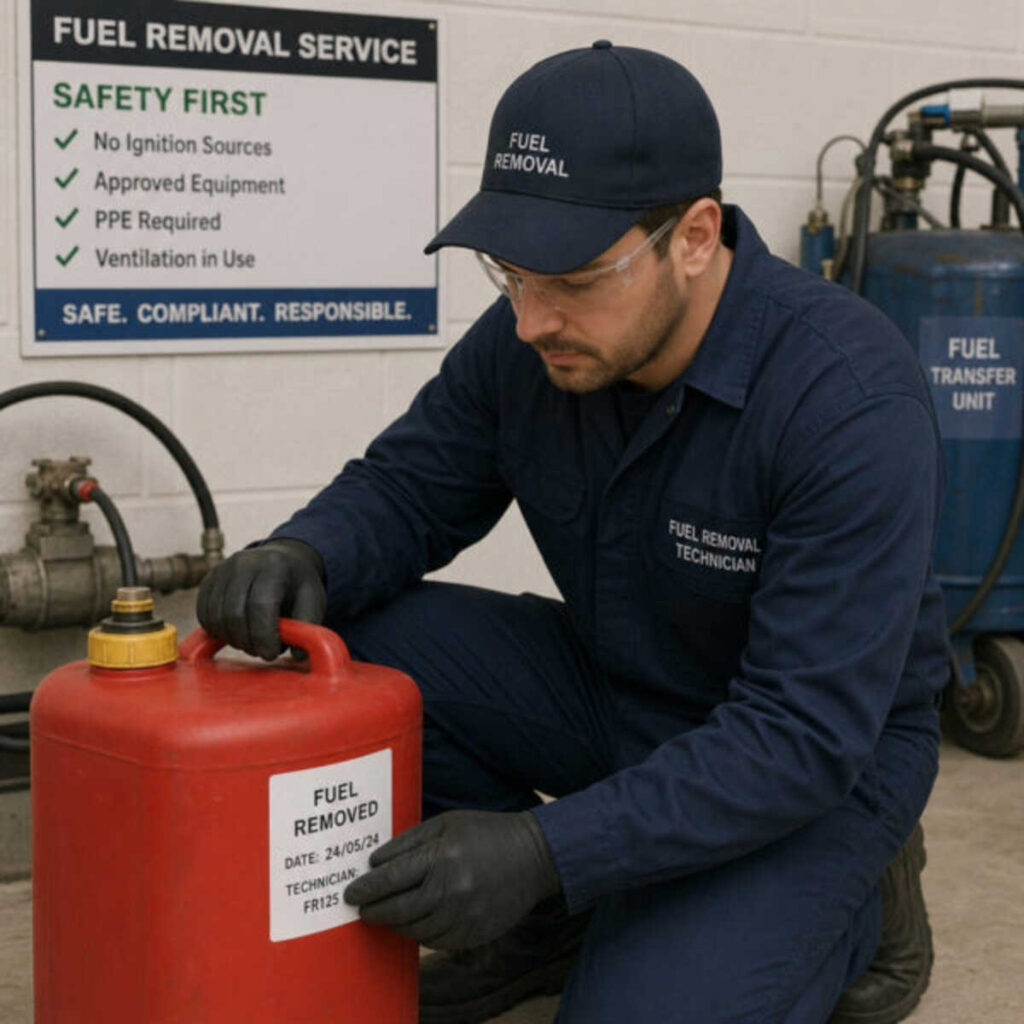
Fuel is familiar, but familiar does not mean harmless. Petrol vapours can be extremely dangerous, and flammable liquids must be handled with care. SafeWork NSW notes that one litre of flammable liquid, when fully evaporated, can produce a large explosive vapour and air mix, which is why ignition sources, ventilation, containment, and safe handling matter during any fuel drain job. (safework.nsw.gov.au)
That is why we take a conservative approach.
A safe fuel drain response may include:
- Keeping ignition sources away from the work area
- Using suitable containers and equipment
- Avoiding unnecessary vapour exposure
- Preventing spills where practical
- Managing the work area so bystanders are not too close
- Considering traffic, slope, drainage, weather, and ventilation
- Avoiding work in unsafe or uncontrolled conditions
- Advising emergency escalation where required
If we believe a location is unsafe for a mobile drain, we will say so. A delay is frustrating, but safety is not optional.
NSW and Australian Compliance Considerations
A professional fuel drain service should not treat fuel as ordinary rubbish. Petrol, diesel, mixed fuel, contaminated fuel, oily residue, absorbents, and fuel-contaminated waste can create safety and environmental risks.
In NSW, hazardous and liquid waste activities may be subject to additional regulation, and the EPA’s waste tracking framework applies to specified high-risk or hazardous wastes transported into, within, or out of NSW. (epa.nsw.gov.au)
For transport safety, the Australian Dangerous Goods Code is the national code for transporting dangerous goods by road and rail, and the National Transport Commission explains that it is given legal force in each state and territory through dangerous goods transport laws. (ntc.gov.au)
Workplaces also have obligations when hazardous chemicals are used, handled, stored, or processed. SafeWork NSW guidance refers to requirements for hazardous chemical storage, notification, placards, manifests, and emergency plans when relevant thresholds and circumstances apply. (safework.nsw.gov.au)
For you as the customer, the takeaway is simple: choose a service that treats safety, containment, and disposal as part of the job, not an afterthought.
Petrol in a Diesel Vehicle
This is one of the most common wrong-fuel situations. It often happens when a driver is distracted, using an unfamiliar vehicle, borrowing a work ute, or switching between petrol and diesel cars.
If you have put petrol in a diesel vehicle:
- Do not start the engine if possible.
- Do not turn the key to “test it.”
- Do not keep driving if the vehicle has already started running poorly.
- Call for an emergency fuel drain as soon as you can.
Petrol in a diesel tank can be a serious issue because diesel fuel systems rely on the fuel for lubrication. If petrol has moved through the system, additional checks may be needed.
A fast drain before the engine starts can reduce the chance of deeper contamination. If the engine has been started, the response may involve draining, flushing, filter attention, and mechanical advice depending on symptoms and vehicle type.
Diesel in a Petrol Vehicle
Diesel in a petrol tank is also a problem, though it tends to show up differently. The engine may smoke, misfire, struggle to start, run roughly, or stop.
If diesel has gone into a petrol vehicle:
- Stop driving as soon as it is safe.
- Do not keep restarting the engine.
- Avoid revving the engine to “clear it out.”
- Arrange a fuel drain and assessment.
Diesel is heavier and less volatile than petrol, so it can interfere with combustion and foul components. Depending on the amount added and how far the vehicle has been driven, the vehicle may need draining, fresh fuel, and further mechanical checks.
Water in Fuel
Water contamination can happen after poor storage, damaged caps, condensation, flooding, old fuel, or contaminated supply. It can affect vehicles, boats, generators, machinery, and site equipment.
Common signs include:
- Water-in-fuel warning light
- Sudden loss of power
- Engine hesitation
- Rough idle
- Stalling
- White smoke in some diesel applications
- Repeated fuel filter issues
- Corrosion concerns
Water does not belong in a fuel system. If water has entered the tank, simply topping up with fresh fuel is not a reliable solution. Fuel tank cleaning and contaminated fuel removal may be needed to prevent the issue from returning.
Dirty, Stale, or Degraded Fuel
Not every fuel issue is sudden. Some vehicles and equipment sit unused for weeks or months. Generators, site machinery, backup pumps, classic cars, boats, and seasonal equipment can all suffer when fuel gets old or contaminated.
Over time, fuel quality can decline. Moisture can build up. Sediment can collect. Rust can form in tanks. Biological contamination can develop in certain diesel storage conditions. Filters can clog, and engines can become unreliable.
You may need fuel tank cleaning if:
- Equipment has been sitting for a long time
- The fuel smells stale or varnish-like
- The fuel looks dark, cloudy, or dirty
- Filters keep blocking
- The engine starts then dies
- A tank has been exposed to water or dirt
- You are preparing old equipment for reliable use again
Cleaning the tank can be a smart preventative step before a small contamination problem becomes a costly breakdown.
AdBlue or Other Fluid in the Fuel Tank
Modern diesel vehicles often use AdBlue, but AdBlue does not go in the diesel tank. If AdBlue, coolant, oil, water, or another fluid has been added to the fuel tank by mistake, do not start the engine.
These mistakes need careful handling. The wrong fluid can damage fuel system components, crystallise, corrode, clog, or contaminate parts that were never designed to handle it.
If this has happened:
- Stop immediately.
- Do not cycle the ignition if you can avoid it.
- Do not dilute it with more fuel.
- Do not attempt a roadside fix with household containers.
- Call for advice and explain exactly what went into the tank.
A fuel drain and clean may be needed before any restart is considered.
Help for Cars, Utes, Vans, Fleets, and Equipment
Fuel mistakes are not limited to private cars. We support a wide range of local customers.
Private drivers
If you are commuting, visiting the beach, heading to the university, doing the school run, or driving through Wollongong, a wrong-fuel incident can derail your day fast. We keep the conversation clear, practical, and calm.
Tradies and work vehicles
Utes, vans, and diesel work vehicles are often filled in a hurry. One mistake can delay a full day of jobs. We help tradespeople minimise downtime where possible.
Fleet operators
Fleet misfuelling can happen when multiple drivers use multiple vehicles. A consistent fuel drain response helps protect assets and keep records clean.
Commercial sites
Commercial properties, depots, workshops, warehouses, and industrial sites may need fuel tank cleaning or contaminated fuel removal from vehicles, machines, tanks, or backup equipment.
Plant and machinery
Machinery with contaminated diesel can become unreliable, expensive to repair, and difficult to diagnose. Removing the contamination at the tank level can be an important part of the solution.
Generators and backup systems
A generator that fails during an outage can create serious disruption. Old or contaminated fuel is a common reliability concern. Fuel tank cleaning and fuel refresh planning can help reduce risk.
Roadside, Service Station, Driveway, Workplace, and Yard Call-Outs
A wrong-fuel incident often happens at the pump, but the vehicle may not always stay there. You might notice the problem:
- While still at the service station
- In a shopping centre car park
- At home in the driveway
- At a workplace
- On a building site
- At a depot or yard
- After driving a short distance
- When the engine starts running badly
Where we can attend safely and legally, we will aim to help on site. If a location is not suitable for safe fuel drain work, we may recommend moving the vehicle by tow truck or arranging a safer place for the work to be carried out.
Traffic, poor lighting, heavy rain, slopes, confined spaces, ignition sources, stormwater drains, and public access can all affect whether a job can be safely completed on the spot.
Why Choose a Local Wollongong Fuel Drain Service?
When your vehicle is stuck, local matters.
A local fuel drain service can offer:
- Better understanding of Wollongong suburbs and access points
- Practical support for local service station incidents
- Assistance for both residential and commercial call-outs
- Familiarity with coastal and industrial environments
- More realistic communication about attendance options
- Support for Illawarra drivers, fleets, and worksites
You are not just looking for someone with a pump. You are looking for someone who can ask the right questions, arrive prepared where available, work safely, and explain the next step without making the situation more stressful.
Clear Communication, No Panic
Fuel problems are stressful enough. You should not have to deal with confusing jargon or scare tactics.
Our approach is simple:
- We listen first.
- We ask practical questions.
- We explain your likely options.
- We avoid making promises before the vehicle is assessed.
- We tell you when mechanical follow-up may be needed.
- We focus on safe, sensible action.
If the job is straightforward, we will say so. If there are risks, we will explain them. If the engine has been driven and deeper inspection is wise, we will not pretend a drain alone solves everything.
That honesty helps you make better decisions.
What Makes a Good Emergency Fuel Drain Call-Out?
The best outcomes usually come from a few simple things happening early.
The vehicle is not started
If you realise the mistake at the pump and do not start the engine, you are in a stronger position.
The situation is reported clearly
Knowing the fuel type, quantity, and vehicle model helps the technician plan.
The work area is controlled
A safer location means a safer and cleaner job.
The fuel is contained properly
Drained fuel must be handled with suitable containers and care.
The customer follows restart advice
Starting too early or ignoring filter and flushing advice can undo the benefit of the drain.
Common Signs You May Need a Fuel Drain
You may not always know that the wrong fuel or contamination is the cause. Watch for these signs:
- The car starts but runs roughly after refuelling
- The engine stalls shortly after filling up
- There is excessive smoke
- The fuel cap area smells unusual
- You notice the wrong receipt or pump after filling
- Dashboard warning lights appear after refuelling
- The vehicle loses power under load
- A diesel vehicle suddenly becomes noisy or hesitant
- Filters block soon after replacement
- Fuel appears cloudy, dark, or separated
- There is visible sediment in a sample
- Equipment runs briefly, then cuts out
If the symptoms began soon after refuelling, a fuel issue should be considered.
What Not to Do After a Fuel Mistake
Trying to fix a fuel problem yourself can make it more dangerous and more expensive.
Avoid these common mistakes:
- Do not drive “just a little further” if you know the fuel is wrong.
- Do not keep restarting a struggling engine.
- Do not dilute the wrong fuel and hope it disappears.
- Do not siphon by mouth.
- Do not use open buckets or household containers.
- Do not pour fuel down drains, gutters, soil, toilets, or bins.
- Do not work near sparks, flames, cigarettes, or hot surfaces.
- Do not ignore a strong fuel smell.
- Do not assume a filter change alone will fix a contaminated tank.
A controlled response is safer and usually smarter.
Fuel Tank Cleaning for Businesses and Worksites
Businesses in Wollongong rely on vehicles and equipment to keep moving. A contaminated tank can cause delays, missed jobs, customer frustration, and unexpected repair costs.
Fuel tank cleaning may be useful for:
- Trade fleets
- Delivery vehicles
- Light commercial vehicles
- Site equipment
- Diesel storage-dependent equipment
- Backup generators
- Pumps
- Forklifts and selected yard equipment
- Maintenance vehicles
- Council or contractor-style assets
- Workshop and depot vehicles
For business customers, we can work with site contacts to understand access requirements, safety rules, induction needs, and operational priorities. If a job needs special planning, we will discuss that before attending.
Emergency Fuel Drain for Service Station Incidents
Many wrong-fuel calls begin at a service station. If you are still at the bowser, stay calm.
Here is what to do:
- Do not start the vehicle.
- Put the vehicle in park or secure it safely.
- Let the service station staff know if you are blocking access.
- Move away from the pump area if instructed and if safe to do so.
- Call for an emergency fuel drain.
- Keep your receipt if it helps confirm the fuel type and quantity.
- Wait for instructions before moving or restarting the vehicle.
If the vehicle is creating a hazard, site staff may ask for it to be moved. If the engine should not be started, a push or tow may be safer than driving. Follow site safety directions.
Emergency Fuel Drain for Roadside Breakdowns
If the vehicle has already been driven and breaks down, your first priority is personal safety.
- Pull over as far from traffic as you safely can.
- Turn on hazard lights.
- Stay clear of moving traffic.
- Keep passengers away from the road.
- Call emergency services if there is immediate danger.
- Call for fuel drain assistance once the scene is safe.
A roadside fuel drain is only appropriate where the location can be made safe enough. Busy roads, poor visibility, narrow shoulders, or high-speed traffic may require towing to a safer location first.
Emergency Fuel Drain for Home and Driveway Incidents
Driveway call-outs can be simpler when the vehicle is accessible, level, and away from ignition sources. However, homes also present risks.
Before a technician arrives:
- Keep children and pets away from the vehicle.
- Avoid smoking near the work area.
- Do not run power tools nearby.
- Do not use extension leads or electrical equipment near fuel vapours.
- Make sure there is clear access to the vehicle.
- Let us know if the vehicle is in a basement, garage, steep driveway, or confined area.
Ventilation and access matter. If the vehicle is in an enclosed space, the job may need extra precautions or a different approach.
Emergency Fuel Drain for Industrial and Commercial Areas
Wollongong and the broader Illawarra include workshops, depots, construction zones, warehouses, manufacturing sites, port-related areas, and industrial premises. Fuel drain work in these settings often needs more coordination than a standard passenger vehicle call-out.
For commercial locations, please tell us:
- Site address and access instructions
- Contact person on site
- Vehicle or equipment location
- Fuel type and suspected contamination
- Any site safety requirements
- Whether induction is required
- Whether hot works, traffic control, or restricted zones are nearby
- Whether there has been a spill
- Whether stormwater drains are close to the work area
Clear site information helps the technician plan the safest and most efficient response.
Pricing: What Affects the Cost?
Fuel drain pricing can vary because the work itself varies. Rather than inventing a fixed price that may not apply to your situation, we give job-specific guidance based on the details you provide.
Factors that may affect cost include:
- Your location in or around Wollongong
- Time of day and emergency availability
- Vehicle type
- Tank size
- Amount of fuel to be removed
- Fuel type involved
- Whether the engine has been started
- Whether the vehicle has been driven
- Access to the tank
- Level of contamination
- Need for fuel tank cleaning or flushing
- Waste handling requirements
- Need for additional filters or mechanical follow-up
- Site access complexity
When you call, provide as much information as you can. That helps us give clearer advice before attendance.
When a Fuel Drain May Not Be Enough
A fuel drain is often an important first step, but it is not a magic reset button for every situation.
Mechanical follow-up may be needed if:
- The engine was driven for a long distance on the wrong fuel
- The engine stopped suddenly
- There are warning lights after the drain
- The vehicle runs roughly after correct fuel is added
- Metal particles or severe contamination are found
- The fuel pump, injectors, or filters may have been affected
- AdBlue or another non-fuel fluid entered the system
- There is a strong ongoing fuel smell
- There is a visible leak
We will let you know when a mechanic, dealership, or specialist repairer should inspect the vehicle further.
Preventing Future Misfuelling
Once the immediate problem is solved, a few small habits can help prevent it from happening again.
Try these tips:
- Pause before lifting the nozzle.
- Read the fuel cap label.
- Check the pump handle colour and fuel name.
- Avoid filling up when distracted or on the phone.
- Use a fuel reminder sticker if you drive multiple vehicles.
- Label fleet fuel caps clearly.
- Train staff on vehicle fuel types.
- Keep fuel cards linked to the correct fuel where possible.
- Store equipment fuel in clearly labelled approved containers.
- Avoid mixing leftover fuel from unknown containers.
For fleets, consider a simple misfuelling response checklist so drivers know not to start the engine and who to call.
Local Service Areas in More Detail
We provide fuel drain Wollongong support across a broad local footprint, subject to technician availability and site suitability.
Central Wollongong
For vehicles in Wollongong CBD, North Wollongong, Coniston, Mangerton, Gwynneville, and West Wollongong, we can assist with service station incidents, apartment parking areas, driveways, workplace car parks, and roadside situations where safe access is available.
Northern suburbs
We support customers around Fairy Meadow, Towradgi, Corrimal, Bellambi, Woonona, Balgownie, Mount Pleasant, and nearby suburbs. If you are stuck after refuelling or dealing with contaminated fuel at home or work, call for advice.
Southern and industrial areas
We can help around Unanderra, Berkeley, Warrawong, Port Kembla, Cringila, Lake Heights, and surrounding areas. These call-outs may involve commercial vehicles, worksites, depots, and industrial access requirements.
Western and growing areas
Dapto, Kembla Grange, Horsley, and nearby suburbs often involve commuters, families, trades, and local businesses. If you need emergency fuel drain support or fuel tank cleaning, get in touch.
Broader Illawarra
Depending on availability, we may assist in nearby areas beyond Wollongong. If you are outside the immediate service area, call anyway and we will confirm whether attendance is possible.
What to Tell Us When You Call
A good phone call can save time. Before calling, gather the details you can safely confirm.
Useful information includes:
- Your exact location or nearest landmark
- Vehicle make and model
- Registration if relevant
- Correct fuel type for the vehicle
- Wrong fuel or contaminant added
- Approximate amount added
- Approximate fuel already in the tank
- Whether the engine was started
- Whether the vehicle was driven
- Any symptoms or warning lights
- Whether the vehicle is blocking traffic or a pump
- Whether there is any spill or leak
- Whether the vehicle is in a garage, basement, slope, or confined space
- Your preferred contact number
If you do not know all the answers, that is fine. Tell us what you can.
Why Professional Handling Matters
DIY fuel removal may look simple online, but real-world fuel drain work carries risks.
Professional handling matters because:
- Fuel vapours can ignite.
- Fuel can harm skin, eyes, and lungs.
- Spills can enter stormwater systems.
- Mixed fuel is difficult to reuse safely.
- Incorrect containers can leak or fail.
- Static, sparks, and hot surfaces can create danger.
- Modern vehicles may have complex tank and pump designs.
- Contaminated systems may need more than a basic drain.
A proper response protects people, vehicles, property, and the environment.
Environmental Care During Fuel Removal
Wollongong’s coastline, waterways, streets, homes, and businesses all deserve careful handling of fuel and contaminated waste.
That means drained fuel and fuel-contaminated materials should be contained, handled, and directed toward appropriate disposal or treatment pathways where required. It also means technicians should think about stormwater drains, soil, paved areas, wind, rain, and nearby people before beginning work.
If fuel has spilled:
- Keep people away from the area.
- Avoid washing it into drains.
- Avoid using water to spread the spill.
- Use suitable spill control if available.
- Notify the site manager if on commercial property.
- Call emergency services if there is a fire, vapour, traffic, or public safety risk.
- Get professional advice before attempting clean-up.
Emergency Response Without Overpromising
We understand why customers want a guaranteed arrival time. When you are stranded, every minute feels long. But emergency work depends on technician availability, traffic, location, weather, access, safety, and the job already underway.
So we focus on honest communication.
When you call, we aim to confirm:
- Whether attendance is available
- A practical response window where possible
- What you should do while waiting
- Whether the vehicle should be towed instead
- Whether the location is suitable for a mobile job
- What information the technician needs
Clear expectations are better than empty promises.
FAQ: Emergency Fuel Drain and Fuel Tank Cleaning in Wollongong
I put the wrong fuel in my car. What should I do first?
Do not start the engine if it is still off. If the engine is running, stop safely as soon as practical. Keep ignition sources away, avoid DIY siphoning, and call for emergency fuel drain advice.
Can you help if I am still at the service station?
Yes, where attendance is available and the site is suitable. Let service station staff know what happened, avoid starting the vehicle, and call for help. If the vehicle is blocking access, follow site safety directions.
What if I have already driven the vehicle?
Stop safely and call for advice. A fuel drain may still be needed, but the wrong fuel may have moved through the system. Depending on symptoms and vehicle type, additional flushing, filter work, or mechanical inspection may be recommended.
Is petrol in a diesel tank serious?
Yes, it can be. Diesel systems depend on fuel properties that petrol lacks. Do not start or keep driving. Arrange a professional drain and assessment quickly.
Is diesel in a petrol tank serious?
Yes. Diesel can cause rough running, smoke, misfiring, and starting problems in petrol engines. Stop driving and arrange a fuel drain.
Can I just top up with the correct fuel?
That is not recommended. Diluting the wrong fuel can push the problem further through the system and may increase damage risk. Get advice before starting or driving.
Do I need fuel tank cleaning or just a drain?
It depends on the contamination, fuel type, tank design, and whether the vehicle has been started. A simple wrong-fuel case caught early may need a drain, while water, sludge, old fuel, or non-fuel contaminants may require fuel tank cleaning.
Can you remove water from a fuel tank?
Yes, water contamination can often be addressed by removing contaminated fuel and cleaning the tank, depending on the vehicle or equipment. Further filter replacement or mechanical checks may also be needed.
Can you work on diesel generators?
Fuel tank cleaning and contaminated fuel support may be available for selected generators and equipment. Call with the make, model, tank size, access details, and symptoms.
Do you service commercial fleets?
Yes, we can assist with fleet misfuelling, contaminated fuel problems, and fuel tank cleaning requests across Wollongong and nearby areas, subject to availability and site suitability.
Can you drain fuel from machinery?
Selected plant and equipment may be supported depending on access, tank design, location, fuel type, and safety conditions. Call to discuss the job before assuming a mobile drain is possible.
Will my vehicle be safe to drive after the drain?
That depends on what happened. If the engine was not started, the outlook is often better. If the vehicle was driven, further checks may be needed. We will explain the next step before you restart.
Do you dispose of the drained fuel?
Drained fuel and contaminated materials need responsible handling. We do not recommend any form of dumping, pouring, or informal disposal. Where waste requirements apply, the handling process should align with NSW environmental and dangerous goods expectations.
How fast can you arrive?
Response depends on technician availability, your location, traffic, site access, safety conditions, and job complexity. Call the emergency number on this page for the current response option.
What areas do you cover?
We assist across Wollongong and nearby Illawarra suburbs, including central, northern, southern, industrial, and western areas, subject to availability.
Can you help after hours?
Emergency support may be available outside standard business hours, depending on technician availability. Call to check current options.
What if there is a fuel spill?
Keep people away, avoid ignition sources, do not wash fuel into drains, and call for advice. If there is a fire risk, vapour hazard, injury risk, traffic hazard, or a significant spill, contact emergency services first.
Is it safe to siphon fuel myself?
DIY siphoning is not recommended. Fuel vapours, spills, static, incorrect containers, and exposure risks can make it dangerous. Professional equipment and safe handling matter.
Can fuel tank cleaning fix repeated filter blockages?
It can help where the root cause is sediment, sludge, water, rust, or dirty fuel in the tank. If filters keep clogging, the tank itself should be investigated.
What should fleet drivers do if they misfuel?
They should stop immediately, not start the vehicle, notify their manager, record the location and fuel details, and call the approved emergency fuel drain provider.
Ready for Help? Call Now
If you are dealing with the wrong fuel, contaminated fuel, water in the tank, stale fuel, or a vehicle that started running badly after refuelling, do not wait and hope it clears itself.
For fuel drain Wollongong assistance, emergency call-outs, and practical fuel tank cleaning support, contact the team now.
Call the emergency number on this page.
When you call, tell us:
- Your location
- The vehicle or equipment type
- The correct fuel
- The fuel or contaminant added
- Whether the engine has been started
- Whether there is any spill, leak, smoke, or warning light
We will help you work out the safest next step.
Calm, Safe, Local Fuel Drain Support
Fuel problems can feel urgent because they are urgent. But urgency does not mean rushing blindly. It means getting the right help quickly, keeping people safe, containing the issue, and avoiding actions that worsen the damage.
That is what our Wollongong fuel drain service is built around: clear advice, practical emergency response, responsible handling, and local support when you need it most.
If you need an emergency fuel drain in Wollongong, call now and let us help you get the situation under control.
