

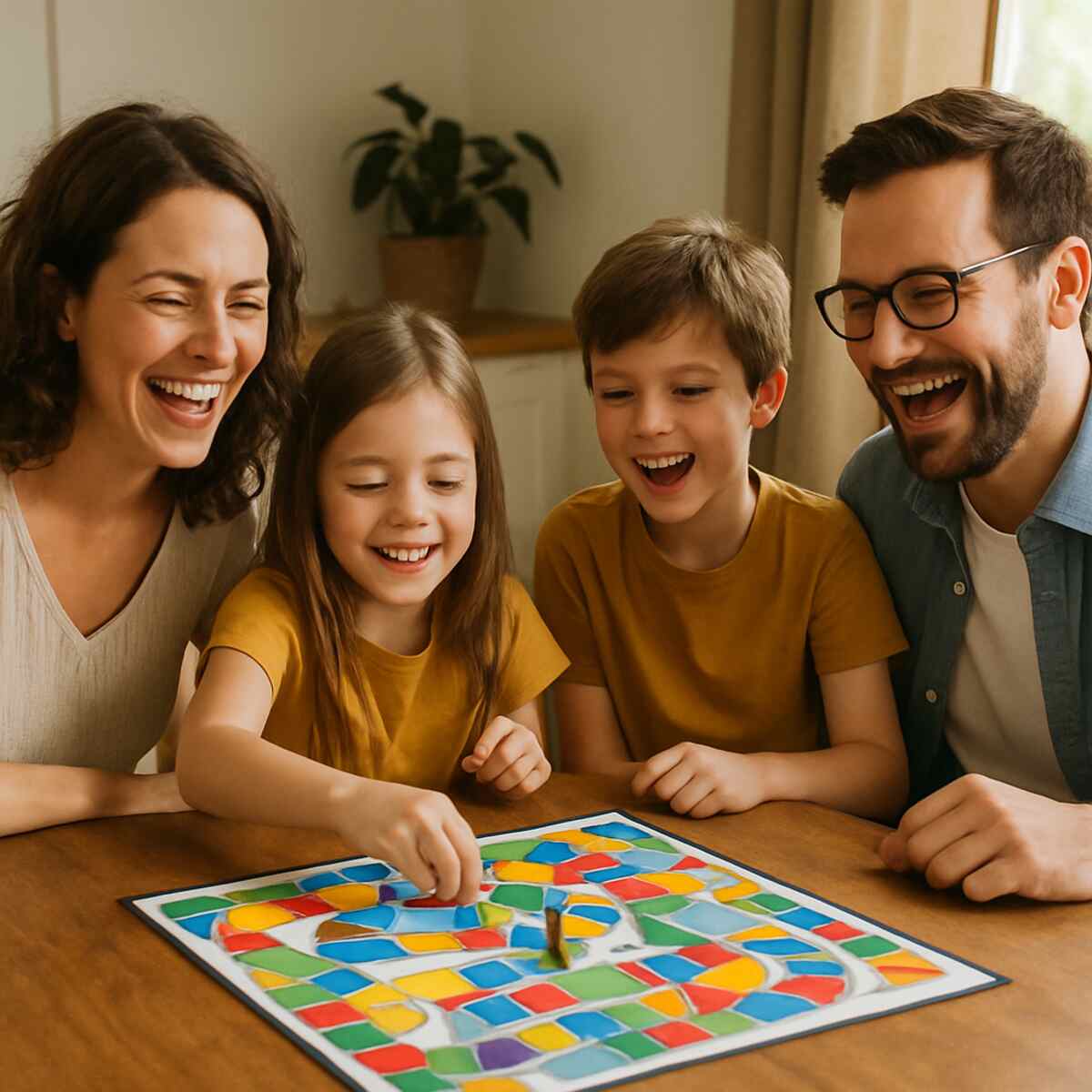

In an era where screens dominate our daily routines and digital notifications constantly fight for our attention, the humble dining room table has reclaimed its status as the ultimate gathering space. Tabletop gaming is experiencing a massive, unprecedented renaissance. Families are discovering that the simple act of sitting down, opening a cardboard box, and learning a new set of rules together can foster connection, spark genuine laughter, and create unforgettable memories. Find out the best info about jago89.
If you are looking to disconnect from technology and reconnect with your loved ones, you are in the right place. Selecting the right game is the first step toward building a cherished weekly tradition. In this comprehensive guide, we will explore the Top 5 board games for family fun, dive deep into the mechanics that make them engaging, and equip you with everything you need to know to transform a regular evening into a spectacular gaming event.
The Resurgence of Tabletop Gaming
Before we dive into the specific recommendations, it is worth exploring why cardboard and meeples (the small wooden figures used in many games) are making such a massive comeback.
For decades, the standard family game shelf consisted of a few predictable titles: a dusty copy of Monopoly, a dog-eared deck of Uno cards, and perhaps a missing-piece version of Clue. While these games hold nostalgic value, they often rely heavily on luck and can drag on for hours, sometimes ending in frustration rather than fun.
Today, the landscape is entirely different. If you pay attention to modern tabletop gaming trends, you will notice a shift toward games that prioritize player agency, continuous engagement, and beautifully illustrated components. Modern game designers focus on keeping all players invested from the first turn to the final scoring phase. There is no more player elimination where one person gets knocked out early and has to watch everyone else play for an hour.
If you are wondering what the most popular board games are right now, they are typically games that strike a perfect balance between strategic depth and accessible rules. They are visually stunning, mathematically elegant, and highly interactive. This modern golden age of gaming has produced thousands of incredible titles, making it easier than ever to find the best tabletop games for all ages.
How to Choose a Family Board Game
Walking into a local hobby store or browsing an online retailer can be an overwhelming experience. With boxes stacked to the ceiling and descriptions filled with unfamiliar jargon like “worker placement” and “deck building,” how do you decide what to bring home?
Knowing how to choose a family board game comes down to evaluating your family’s unique dynamics, attention spans, and preferences. Here are the most critical factors to consider:
1. Consider the Age Range
Finding board games for mixed age groups is often the biggest hurdle for parents. You need something that won’t bore the teenagers but won’t overwhelm the seven-year-old. Look for games with layered strategies: simple enough on the surface for a child to grasp, but complex enough underneath to keep adults strategizing. The best board games for kids and adults to play together treat all players as equals, offering a level playing field where a clever child can absolutely outsmart an adult.
2. Time and Attention Span
For a family game night to be successful, the game’s length must align with your family’s stamina. If your group is new to gaming or includes younger children, look for low complexity games for short attention spans. A game that takes 20 to 30 minutes is usually the sweet spot for beginners. You can always play a short game twice if everyone is having fun, but slogging through a three-hour epic with a restless child is a recipe for disaster.
3. Rule Complexity
Nothing kills the momentum of a game night faster than a 40-page rulebook. Look for games with easy to learn rules for non-gamers. A good benchmark is the “five-minute rule”: if you can’t explain the core concept and how to take a turn in under five minutes, the game might be too complex for a casual family setting.
4. Replayability
A great board game is an investment. You want a game that feels fresh every time you open the box. This is where replay value and game mechanics come into play. Games with modular boards (where the map changes every game), randomized setup, or multiple paths to victory ensure that your 50th playthrough is just as exciting as your first.
The Core Dilemma: Cooperative vs Competitive Family Games
When building your collection, you will eventually face a vital design philosophy question: Should we work together or battle it out? Understanding the dynamic of cooperative vs competitive family games is essential for maintaining peace and maximizing fun at the table.
Competitive Games
The vast majority of traditional games are competitive. Players are pitted against one another, racing to score the most points, reach a finish line first, or amass the most wealth.
- Pros: They teach healthy competition, strategic adaptation, and how to lose (and win) graciously.
- Cons: In highly competitive families, they can sometimes lead to hurt feelings, especially if older players consistently target younger ones or if the game involves “take-that” mechanics (stealing from or directly attacking another player).
Cooperative Games
In a cooperative (or “co-op”) game, the players form a team to play against the board itself. You all win together, or you all lose together.
- Pros: These are excellent for families with sore losers or highly sensitive younger children. They foster teamwork, communication, and collective problem-solving. Everyone shares in the victory, and defeat is a shared burden rather than a personal failure.
- Cons: They can sometimes suffer from the “alpha gamer” syndrome, where one confident player starts dictating what everyone else should do on their turn, turning the other players into mere spectators.
To build a well-rounded library, it is highly recommended to have a mix of both. Fortunately, the market is currently flooded with incredibly well-designed options on both sides of the aisle, including some of the top rated cooperative games for families that actively prevent the alpha-gamer problem by limiting communication or giving players hidden information.
The Main Event: The Top 5 Board Games for Family Fun
When newcomers to the hobby ask me to name 5 board games that will instantly upgrade their weekend, I don’t point them toward heavy, highly complex simulations, nor do I recommend pure luck-based children’s games. Instead, I direct them to the modern classics—the sweet spot of tabletop gaming.
If you are looking for the absolute best board games to introduce to your family, here is the definitive list. These titles serve as the best classic board game alternatives, replacing the drawn-out frustration of older games with sleek, engaging, and deeply rewarding experiences.
1. Ticket to Ride: The Cross-Country Adventure
Genre: Competitive / Route Building Player Count: 2-5 players Average Playtime: 30-60 minutes Best For: Families looking for beginner friendly board games for families with a touch of geographic education.
The Overview: Ticket to Ride is arguably the undisputed king of modern family games. Players collect cards of various types of train cars and use them to claim railway routes connecting cities across North America. The longer the routes, the more points they earn. Additional points are awarded to those who fulfill “Destination Tickets”—secret goal cards that connect distant cities, like Los Angeles to New York.
Why Families Love It: The genius of Ticket to Ride lies in its simplicity. On your turn, you can do exactly one of three things: draw more train cards, claim a route, or draw more destination tickets. That is it. These incredibly easy-to-learn rules for non-gamers mean you can teach a grandparent or a seven-year-old how to play in under three minutes.
However, beneath this simple framework lies a tense, thrilling game of strategy. Do you claim a crucial chokepoint on the map early to block your dad, or do you hoard cards to build a massive, point-scoring route later? The balance of risk and reward keeps everyone engaged until the final train is placed.
Actionable Tip for Beginners: Do not draw too many Destination Tickets early in the game. Any tickets you fail to complete by the end of the game are subtracted from your score! Focus on completing your initial routes before getting overly ambitious.
2. Pandemic: Saving the World Together
Genre: Cooperative / Action Point Allocation Player Count: 2-4 players Average Playtime: 45 minutes Best For: Teams wanting to experience one of the top rated cooperative games for families.
Overview: In Pandemic, you and your family are members of an elite disease-control team. Four deadly diseases have broken out across the globe, and it is up to your team to travel the world, treat infections, and discover cures before time runs out. The game acts as an artificial intelligence, actively spreading diseases and causing outbreaks after every player’s turn.
Why Families Love It: If your family struggles with head-to-head competition, Pandemic is the perfect antidote. It forces players to communicate, plan, and share resources. Every player takes on a unique role—like the Medic, who can clear diseases faster, or the Scientist, who needs fewer cards to find a cure. This makes everyone feel essential to the team’s success. Winning a game of Pandemic results in high-fives and a genuine sense of collective achievement. It stands tall among strategy board games because it requires foresight and logical planning.
Actionable Tip for Beginners: Start on the easiest difficulty setting (using only four Epidemic cards). Focus heavily on finding cures rather than just treating diseases; treating diseases only buys you time, but finding cures is the only way to actually win the game.
3. Catan: Trade, Build, Settle
- Genre: Competitive / Resource Management and Trading.
- Player Count: 3-4 players (up to 6 with expansions).
- Average Playtime: 60-90 minutes.
- Best For: Developing negotiation skills and strategic planning.
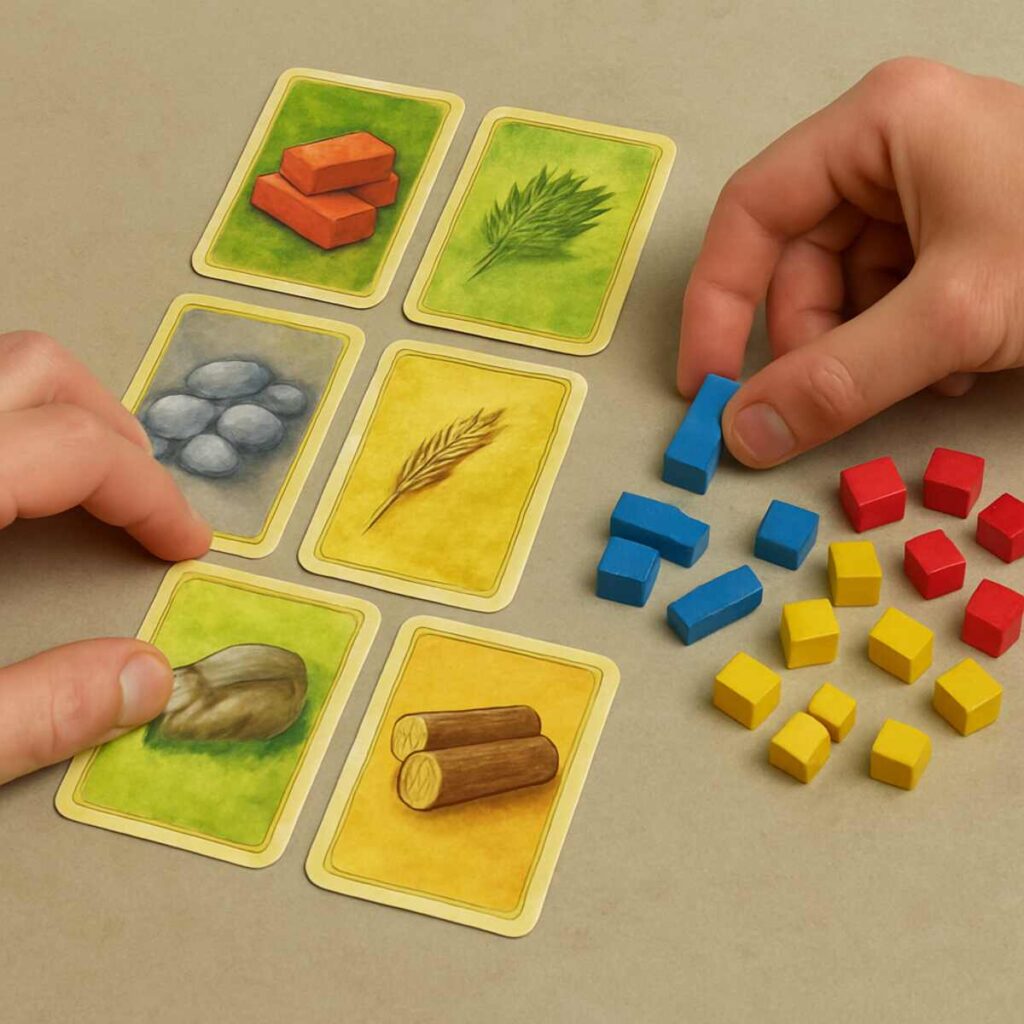
The Overview: Originally known as The Settlers of Catan, this game is widely credited with sparking the modern board game revolution in the late 1990s. Players arrive on the uncharted island of Catan and must gather resources (wood, brick, sheep, wheat, and ore) to build roads, settlements, and cities. The board is made up of hexagonal tiles with numbers on them; when the dice roll matches a number, the adjacent terrain produces resources.
Why Families Love It: Catan is the ultimate trading game. Because you rarely generate all the resources you need on your own, you are forced to talk, negotiate, and trade with your fellow players. “I’ll give you two sheep for one brick!” is a phrase you will hear echoed through the house. This constant interaction ensures that there is no downtime. Even when it is not your turn, you are engaged because you might be involved in a trade or collecting resources from a dice roll.
The modular, randomized hexagonal board provides immense replay value and game mechanics that ensure no two games ever play out exactly the same way.
Actionable Tip for Beginners: In the initial setup phase, place your starting settlements in spots with a diverse range of numbers (specifically the highly probable 6s and 8s) and ensure you have access to a variety of resources. A player without access to ore or wheat will struggle in the late game.
4. Codenames: The Ultimate Word Association Party
- Genre: Competitive / Team-based Word Deduction.
- Player Count: 2-8+ players (best with 4 or more).
- Average Playtime: 15 minutes.
- Best For: Large families, parties, and testing your communication skills.
The Overview: Codenames is a brilliant, award-winning party game. Players split into two teams (Red and Blue). A grid of 25 word cards is laid out on the table. Only the “Spymasters” (one player from each team) know which words belong to their team, which belong to the opposing team, which are neutral, and which one is the game-ending “Assassin.”
The Spymaster’s goal is to give a one-word clue that connects multiple words on the board belonging to their team, followed by a number indicating how many words relate to that clue. (For example: “Ocean, 2” to connect the words “Water” and “Shark”).
Why Families Love It: Codenames is incredibly fast-paced and hilarious, and it generates fascinating conversations. It provides a unique window into how your family members’ minds work. Why did your sister think “Apple” and “Car” were connected by the word “Gravity”? The post-game discussions are often just as fun as the game itself. Because it accommodates a large number of people and plays so quickly, it is perfect for holiday gatherings and multi-generational play. It is undoubtedly one of the best board games for kids and adults to play together because it relies on creativity rather than complex rules.
Actionable Tip for Beginners: As a Spymaster, always check the Assassin’s word and the opposing team’s words before giving your clue. The worst thing you can do is give a brilliant clue that accidentally points your team straight toward an instant loss!
5. Carcassonne: Crafting a Medieval Landscape
Genre: Competitive / Tile Placement. Player Count: 2-5 players. Average Playtime: 35-45 minutes. Best For: Visual thinkers and families looking for a relaxing yet strategic experience.
The Overview: Named after the heavily fortified French city, Casscassonne is an elegant game of landscape building. There is no board. Instead, players take turns drawing a single square tile and placing it adjacent to the tiles already on the table, matching roads to roads, cities to cities, and fields to fields—much like a dynamic jigsaw puzzle. Once a tile is placed, the player can choose to put one of their wooden “meeples” on that tile to claim a road, city, or monastery to score points.
Why Families Love It: Carcassonne is highly tactile and visually satisfying. At the end of every game, regardless of who wins or loses, you have collectively created a beautiful, sprawling map that looks completely different every time. It is one of the top low-complexity games for short attention spans because a turn consists of just drawing and placing one tile. The pacing is snappy, the rules are intuitive, and the point-scoring mechanics gently introduce basic geometry and spatial reasoning.
Actionable Tip for Beginners: Do not commit all your meeples too early! You only have a limited supply. If you lock them all up in massive, unfinished cities, you will have no workers left to score the quick, easy points from smaller completed features.
The Hidden Power of Play: Educational Benefits of Strategy Board Games
While the primary goal of any family game night is entertainment and bonding, a massive underlying advantage often goes unnoticed. The educational benefits of strategy board games are profound, making them a secret weapon for parents seeking to develop their children’s cognitive and social skills outside the classroom.
When you replace an evening of passive television watching with a session of Ticket to Ride or Catan, you are engaging in “stealth learning.” Here is a breakdown of the vital skills developed around the gaming table:
Cognitive and Academic Skills
- Math and Probability: Many modern games require continuous, low-level math. Players are constantly counting points, managing currency, or evaluating the probability of a specific dice roll. In games like Catan, players intuitively learn statistical distribution (understanding why a 7 rolls more often than a 12).
- Spatial Reasoning: Tile-laying games like Carcassonne require players to visualize how shapes fit together and how placing a piece in a specific orientation will affect the board geometry.
- Reading and Vocabulary: Word games like Codenames expand vocabulary and lateral thinking. Players learn about synonyms, homophones, and the subtle nuances of language. Even standard card games require reading comprehension to understand card abilities and rule text.
- Long-term Planning and Executive Function: Strategy board games teach players how to set a goal, break it down into manageable steps, and execute a plan over multiple turns. It requires anticipating obstacles and developing backup plans.
Social and Emotional Intelligence
- Delayed Gratification: In a fast-paced digital world, tabletop games force players to wait their turn. They teach patience and the understanding that actions take time to yield rewards.
- Emotional Regulation: Learning how to lose with grace and win with humility is a critical life skill. Board games provide a safe, low-stakes environment to experience frustration, disappointment, and triumph.
- Communication and Negotiation: Trading games and cooperative games force players to articulate their needs, listen to others, and compromise.
- Following Rules: Games operate on a strict social contract. Players must mutually agree to abide by the rules. This reinforces the concepts of fairness, integrity, and rule-of-law in a highly practical way.
By thoughtfully selecting the best tabletop games for all ages, parents can foster a rich learning environment disguised as pure fun.
The Art of Hosting a Successful Family Game Night
Owning a great game is only half the battle. To ensure that tabletop gaming becomes a beloved family tradition rather than a one-off experiment, you need to curate the experience. Hosting a successful family game night requires a bit of preparation, the right environment, and a positive attitude.
Here is a step-by-step guide to making your game nights legendary:
1. Set the Stage
Clear the table of all clutter, mail, and non-essential items. Ensure the room has bright, comfortable lighting so everyone can easily read the text on cards and see the colors on the board. Put away smartphones and turn off the television. Consider putting on some low-volume, thematic instrumental background music. (For example, play acoustic guitar music while playing Carcassonne, or train sounds for Ticket to Ride). Setting a distinct mood signals to the family that this is a special, focused time.
2. Choose the Menu Wisely
Snacks are an essential part of any gathering, but board games and greasy fingers are mortal enemies. You do not want Cheeto dust or pizza grease ruining your expensive game components.
- Avoid: Chips, buttery popcorn, pizza, and sticky candies.
- Embrace: Pretzels, grapes, baby carrots, nuts, and drinks with secure lids. Keep napkins readily available!
3. Be the “Rule Master”
If you are the one introducing the game, it is your responsibility to learn it before you sit down with your family. Never open a brand-new game and try to read the rulebook out loud to the group; people will lose interest in three minutes.
- Pre-game Prep: Read the rules on your own, set up a dummy game, and play a few turns by yourself.
- Use Video Resources: YouTube is filled with excellent “How to Play” videos for almost every game in existence. Sending a 5-minute tutorial video to your family members earlier in the day is a highly effective way to get everyone on the same page.
4. Teach the Game Effectively
When teaching beginner friendly board games for families, start with the overarching theme and the winning condition. For example: “In this game, we are rival train barons trying to build tracks across America. The game ends when someone runs out of trains, and the person with the most points wins.” Once they know why they are playing, teach them what they can do on their turn. Do not explain every tiny, obscure edge-case rule right away. Explain the basics, start playing, and gently guide them through their first few turns.
5. Focus on the Fun, Not the Win
As the host and the person who likely knows the game best, your primary job is to ensure everyone has a good time, not to crush your family members without mercy. If you notice a younger player struggling, offer gentle strategic advice without playing the game for them. Praise clever moves from your opponents. Keep the atmosphere light, encouraging, and highly interactive.
Expanding Your Collection: Beyond the Top 5
Once your family has mastered the Top 5 board games for family fun listed above, you might find yourselves craving new challenges. The beauty of the modern hobby is that there is always something new to discover.
If your family loved the cooperative nature of Pandemic, you might explore Forbidden Island or Forbidden Desert, which offer similar teamwork mechanics with an engaging treasure-hunting theme.
If they enjoyed the tile placement of Carcassonne, games like Azul or Patchwork offer beautiful, puzzle-like experiences that test spatial reasoning.
If Codenames was a hit at your last party, look into Just One or Dixit, which also rely on clever wordplay, image association, and understanding your family’s unique communication styles.
By paying attention to the specific replay value and game mechanics that your family enjoys, you can curate a personalized library that guarantees decades of entertainment.
Frequently Asked Questions About Family Board Gaming
To further equip you on your tabletop journey, let’s address some of the most common questions newcomers have when entering the hobby.
Board games seem expensive now. Are they worth the price?
While modern board games can range from $30 to $80 or more, it is helpful to look at the “cost per hour of entertainment.” A $50 game that your family plays for 20 hours over the course of a year is vastly cheaper than taking a family of four to the movie theater for a two-hour film. Because of the high-quality components and immense replayability, modern board games are a fantastic entertainment investment.
My kids have a vast age gap (e.g., 6 and 14). What do I do?
This is where cooperative vs competitive family games truly matter. A 14-year-old will easily out-strategize a 6-year-old in a competitive game. By playing a cooperative game, the 14-year-old can act as a team captain, guiding the 6-year-old and working together against the board. Alternatively, team-based party games allow you to pair the younger child with an adult.
How do I handle a child who gets incredibly upset when losing?
First, shift toward cooperative games for a while to build their confidence. Second, model good losing behavior yourself. When you lose, say out loud, “Wow, you played a great game! I lost, but I had so much fun playing with you.” Finally, praise the effort and the clever moves during the game, rather than just praising the winner at the end.
Conclusion: Roll the Dice on Family Time
In a world that often pulls us in a dozen different, digitized directions, board games offer a rare sanctuary. They demand our physical presence, our mental focus, and our direct interaction with the people sitting across from us.
By investing in the Top 5 board games for family fun—Ticket to Ride, Pandemic, Catan, Codenames, and Carcassonne—you are doing more than just buying cardboard and plastic. You are purchasing a vehicle for conversation, a classroom for critical thinking, and a reliable engine for laughter.
Remember that choosing a family board game is an ongoing process. What works for your family today might change as your children grow and your strategic appetites develop. Embrace the journey, focus on the joy of playing rather than the pressure of winning, and take pride in mastering the art of hosting a successful family game night.
Clear off the dining room table, shuffle the cards, set up the board, and invite your family to sit down. A world of adventure, strategy, and connection is waiting just inside the box. Happy gaming!
